In my previous post we spoke about opening up access for the horses onto the very top field. Not long after doing this we has several days of frost.
The sunny days and the nights with the frost create an increase in the sugars in the grass and where a horse might be susceptible there is an increased risk of laminitus.
Now we know that Willow, our Exmoor pony, is very susceptible and as such we have modified her feeding regime and also we restrict/ slow down her grazing by turning her out later in the day and when turned out she has a grazing muzzle fitted. The muzzle doesn’t stop grazing it just slows them down and also reduces the amount of grass they can eat. To make up for the reduced grazing we provide hay for her but the hay is soaked so that the quality and the sugars are reduced. All of this is key as if laminitis is left un-managed then it can cause death for the Horse.
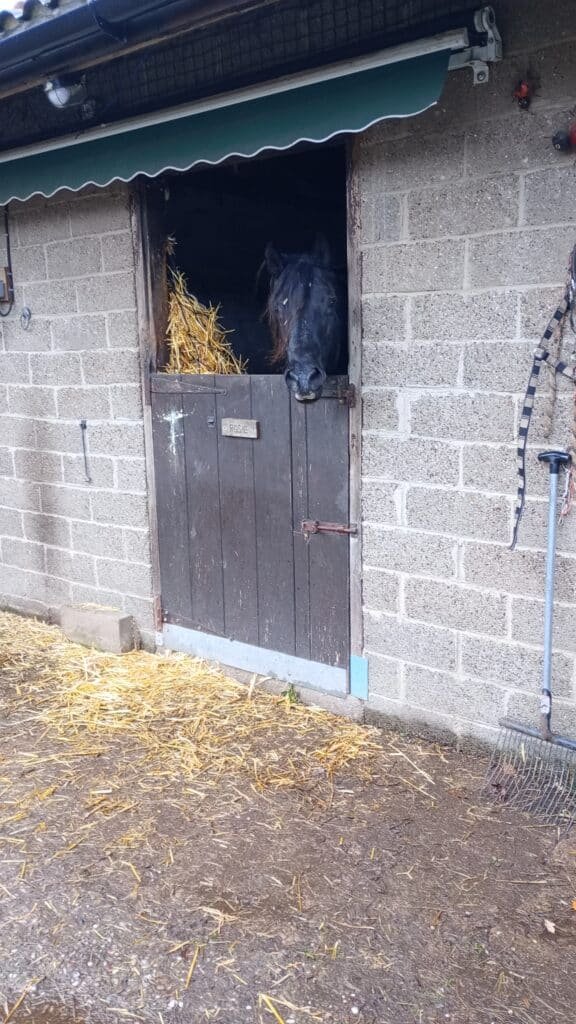
Rosie, our welsh Cob, generally is not normally prone to laminitis so it was of note that we saw her coming in on an evening a bit lame. Due to the nature of our ground and soil we checked that there wasn’t stones in her hooves or grit around the “white lines” of her hoof. When this proved to be clear the next concern was that did she have an abscess coming on. As we watched he and checked her the suspicion started that she may have laminitis as she can be a “piglet” and over eat when moved onto new grass.
With these concerns we called our Farrier to come and have a look at her and check her feet.
The assessment was that it highly likely to be Laminitus, her feet were checked and tidied up. It was then a case of 6 days of box rest with a hay net of straw during the day and then a long soaked hay net for over night. Towards the end of the box rest period the farrier was back and confirmed that the measures were working.
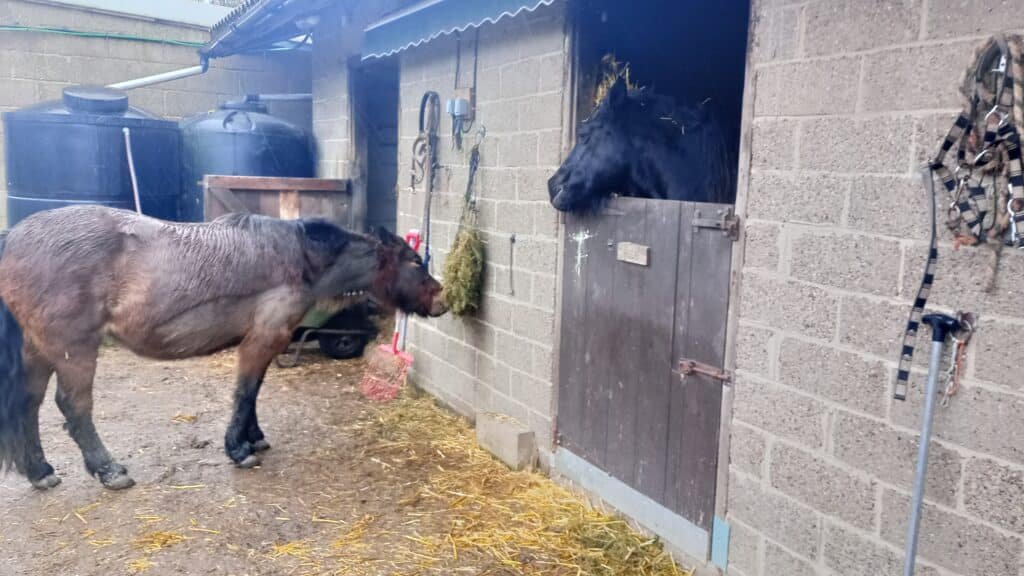
The next thing was that we ordered a grazing muzzle for rosie and we could turn her out wearing it. Also she wouldn’t be turned out first thing but would go out at the same time as Willow.
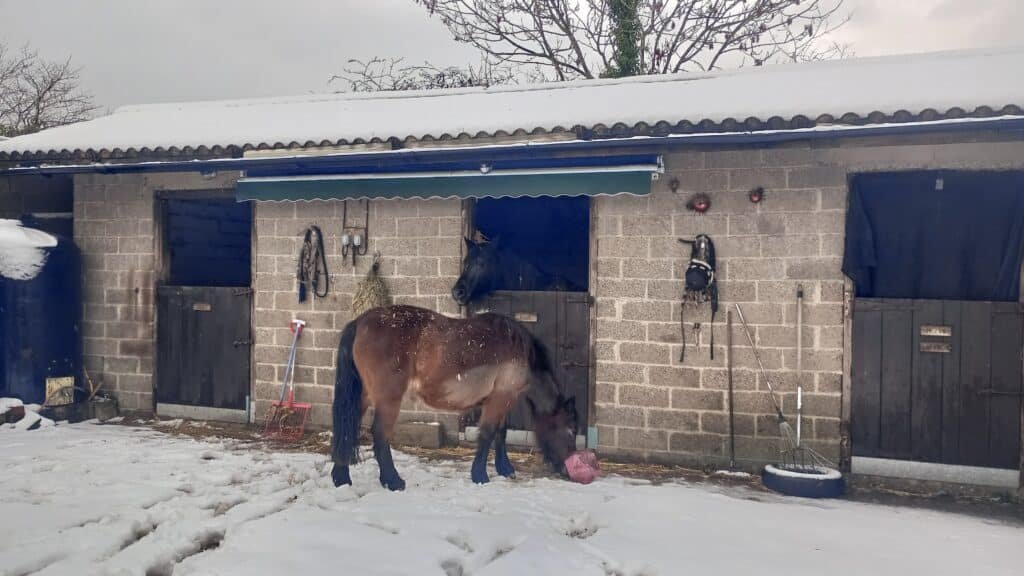
The last thing that was done was to shut the horses of the Very Top Field again.
All of this happened on the run up toward Christmas and added to the workload at a time when there was reduced day light. Such is the joys of having and working with Horses.
Rosie is on the mend now and is getting the hang of the grazing muzzle. We’ll be opening the Very Top Field again once the snow and ice have cleard but for the time being, and for the benefit of their health both Rosie and Willow will continue with the muzzle wearing.
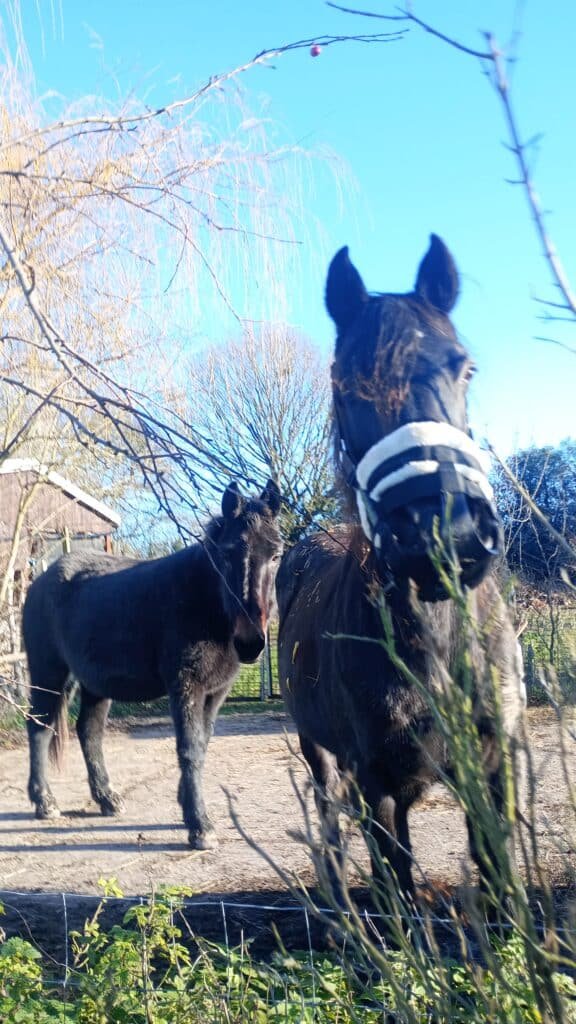
The key lesson from all of this is to catch it early, keep an eye on your horses and look for lameness or changes in the way they are moving, also be aware of changes in conditions – access to new grass along with the frosts. If in doubt talk with your farrier and vets.
More information about laminitis can be found here – https://www.thelaminitissite.org/articles/cold-weather
Leave a Reply